

The Visionary Investor
Do you have a business in supply tech innovation? Are you trying to scale? You’re in the right place. Welcome to a wealth of articles written by Luis Solana, a seasoned pro in supply chain management and your trusted guide to transforming good ideas into great businesses.
Filter by Categories
Visibility | Global Trade | Resiliency | Productivity | Automation | Digitization | Orchestration | Agility | Investing | Strategy | All

The Supply Chain Leader of 2030: Designing the Human-AI Operating Model for the Americas
In ten years, the best supply chain leaders will not be the ones who managed the most efficiently. They will be the ones who knew which decisions to give to the machine — and which ones to keep.
Green by Design, Not by Mandate: How ESG Is Rewiring North American Supply Chains
Carbon is already a tariff. US institutions are collecting it at the board level. The companies pretending it is not a cost structure are making a bet they have not yet acknowledged.
Physical AI Has Entered the Building: When Intelligence Meets Atoms in the Americas
AI that lives in a dashboard is a tool. AI that moves inventory, adjusts production schedules, and reroutes shipments in real time is infrastructure. Most investors are still pricing the dashboard.
The Americas Trade Rewrite: Building a Supply Network That Outlives Any Tariff Regime
FDI in tariff-exposed, value-chain-intensive sectors fell 25% in 2025. That is not a footnote in a trade report. That is a quarter-trillion dollars redirected — away from supply networks that were optimized for a world that no longer exists.
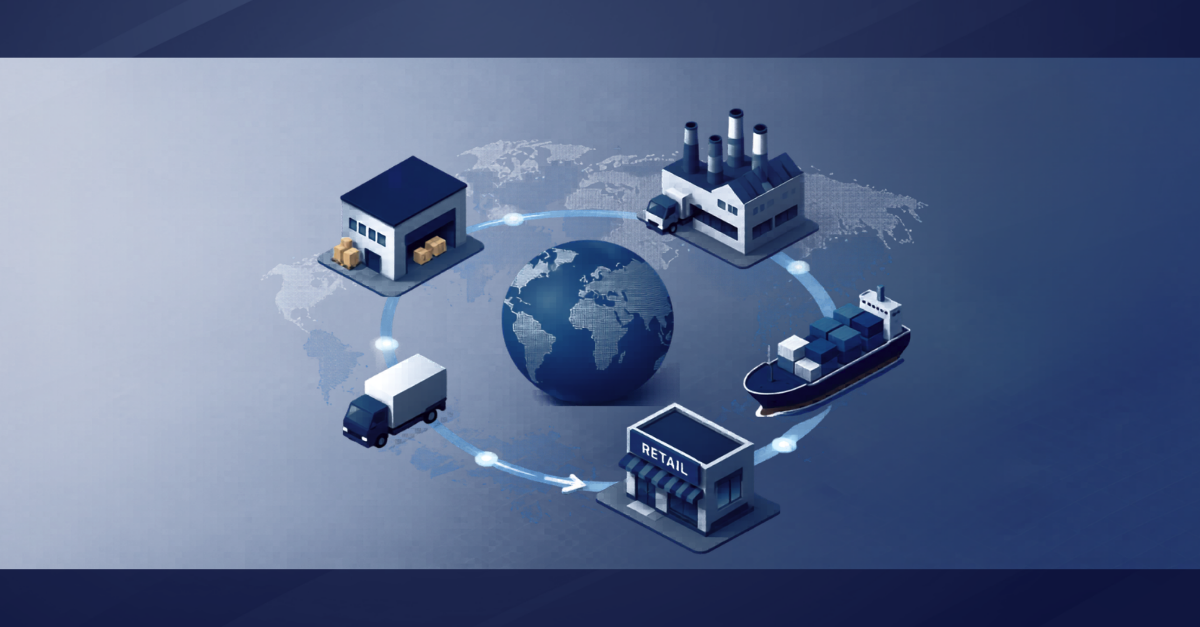
3-Part Blog Series Summary- THE MISPRICED LAYER: Why Supply Chain Is Becoming the Control System of Modern Technology
Most investors are still misreading supply chain:
They think it’s an efficiency layer.
It’s becoming a control layer.
And control layers are where value concentrates.
If you are allocating capital into technology and not explicitly underwriting this shift, you are likely mispricing where value is moving next.
This is less about operations—and more about where control, and therefore value, is consolidating.
Blog 3/3 RESILIENCE IS NOT DEFENSE: Why Supply Chain Maturity is Rewriting Tech Valuations
In most investment models, resilience is treated as protection.
A way to limit downside.
That framing is incomplete.
Because in today’s environment, resilience is not just about avoiding loss—
it is about capturing upside when conditions are unstable.
Blog 2/3 FROM AI TOOLS TO AUTONOMOUS NETWORKS: Who Will Own the Execution Layer
Who Will Own the Execution Layer
Artificial intelligence is now central to most investment narratives.
But there is a quiet mismatch in how it is being underwritten.
Most capital is still flowing toward AI that analyzes, summarizes, or recommends.
Far less attention is given to AI that executes.
That distinction matters.
Because in supply chains—and increasingly across technology businesses—
value is not created when a decision is identified.
It is created when that decision is carried through the system.
Blog 1/3 THE ILLUSION OF SCALABLE TECH: Why Supply Chain is the Real Constraint
Most technology investors are still pricing companies as if scale is frictionless. It isn’t.
Growth doesn’t fail because companies can’t sell. It fails because they can’t deliver—at scale, at cost, and on time.
That gap is widening, and it’s where value is quietly being destroyed.

ADVANTAGE - Decision Velocity Is the New Supply Chain Moat:
Slow decisions—not bad ones—are the biggest risk in 2026.
The advantage is no longer where you think it is
For decades, supply chain competitive advantage was built on three pillars:
Cost efficiency
Scale
Reliability
Over time, resilience was added to that list.
Today, all four are converging.
Technology has democratized access to data. Global networks have matured. Even resilience strategies—multi-sourcing, buffer inventory, redundancy—are becoming standard practice.
The result is a quiet but important shift:
The traditional sources of supply chain advantage are no longer differentiators.
So what is?
TRANSFORMATION - The Rise of Autonomous Supply Chain Decisions: From planning cycles to continuous, AI-driven orchestration.
The old model didn’t just break—it exposed its limits
In the first quarter of 2026, it became clear that supply chains have crossed a structural threshold.
Volatility is no longer episodic. Stability is no longer the baseline. And traditional supply chain operating models—built on planning cycles, functional silos, and human coordination—are increasingly outmatched by the environment they operate in.
But recognizing the problem is only the first step.
The more important question is: what replaces it?
Because if supply chains can no longer rely on periodic planning and reactive execution, then the entire model of how decisions are made must evolve.
And that evolution is already underway.
INFLECTION - Supply Chains Have Crossed a Point of No Return: The first 90 days of 2026 are forcing a new supply chain operating model
The beginning of 2026 didn’t disrupt supply chains — it exposed them
In the first quarter of 2026, global supply chains faced yet another wave of pressure.
Trade corridors remain fragile. Geopolitical tensions continue to reshape sourcing strategies. Demand signals are increasingly volatile, distorted by pricing pressure and shifting consumer behavior. Labor availability remains inconsistent across critical nodes.
How Modern Platforms Connect Supply Chain Moves to Financial Outcomes
In Blog 1, we explored the shift from visibility to autonomous orchestration — where AI compresses decision cycles and embeds execution logic into the operating core.
In Blog 2, we examined the rise of adaptive global trade networks — where optionality replaces static footprint design in a fragmented world.
Both shifts point to a deeper transformation.
Resiliency is no longer defensive.
It is economic.
The companies that understand this are not asking how to “absorb shocks.”
They are asking how to convert volatility into structured advantage.

Why Adaptive Supply Chains Are Replacing Static Globalization
The old globalization thesis assumed stability.
The new trade reality assumes volatility.
From Visibility to Autonomous Orchestration: Why AI Is Rewiring the Supply Chain Operating Model
For more than a decade, supply chain transformation meant one thing: visibility.
Control towers. Dashboards. Real-time tracking.
The promise was simple — if we could see everything, we could manage anything.
And to be fair, visibility mattered. It exposed latency. It surfaced risk. It highlighted fragmentation across plan–source–make–deliver–collect. But visibility was never the destination. It was the prerequisite.
In 2026, the operating question has shifted.
It’s no longer: Can we see it? It’s: Can we decide — and execute — in time?
That difference changes everything.
Resiliency as a Profit Strategy: When Supply-Chain Stability Turns into Competitive Advantage
Companies that embed resilience into their supply-chain design are seeing tangible financial upside: lower earnings volatility, steadier margins, stronger cash flow, and greater enterprise value. As tariffs, climate events, and geopolitical shocks become a permanent feature of global trade, the old model of hyper-efficiency without flexibility is proving fragile.
The leaders pulling ahead aren’t retreating from globalization — they’re redesigning it. Diversified sourcing, real-time visibility, flexible logistics, and digitally enabled decision-making are turning supply-chain stability into a competitive advantage. What was once treated as insurance is now a value-creating asset.
In this moment of sustained uncertainty, resilience has shifted from a cost center to a strategic lever. The firms that recognize this early won’t just weather disruption — they’ll outperform because of it.
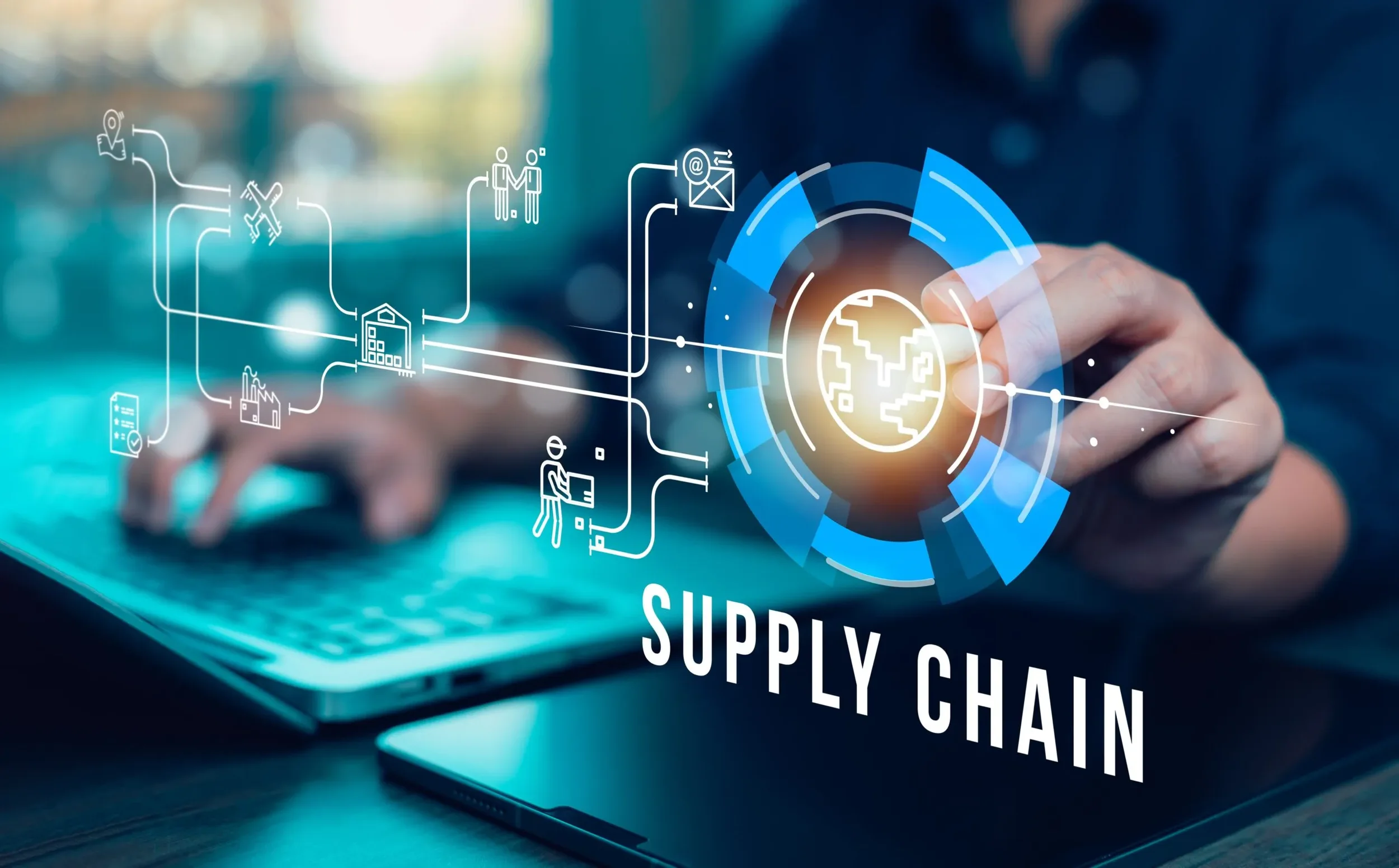
The New Age of Global Trade: Why Adaptive, Real-Time Networks Will Replace Static Global Supply Chain Model
By 2025, nearly every assumption behind traditional global supply chains broke at the same time. Geopolitics, freight volatility, climate risk, labor inflation, and rising expectations for speed and transparency.
What’s replacing it isn’t deglobalization. It’s adaptive, real-time global networks.
Leaders today are building networks that can sense, decide, and rebalance continuously, across regions, suppliers, ports, and demand signals.
That means:
• Distributed production instead of mega-hubs
• Multi-shoring driven by operational risk
• AI-powered orchestration that acts in real time
• Smaller, automated regional nodes that stay cost-competitive
• Networks designed for volatility
As the International Monetary Fund has noted, this shift is about secure and diversified supply ecosystems. The strategic reality is simple. The structure of your global network is now a core driver of enterprise value.
The companies redesigning their supply chains now, around adaptability, intelligence, and resilience, will lead the next decade of volatility.
AI & Autonomous Orchestration in Supply Chains: Moving Beyond Automation
As we move toward 2026, supply chains are entering a new era, one defined not by incremental automation but by autonomous orchestration.
In this piece, we explore how agentic AI is transforming supply chains from task-based systems into intelligent, end-to-end networks that can sense disruption, make decisions, trigger action, and continuously adapt in real time.
We break down:
The shift from automation to autonomous orchestration
What agentic AI actually enables across planning, sourcing, logistics, and execution
Why 2025–2026 is a true inflection point for operators and investors
Where the market is consolidating — and where long-term value will be created
This is not a future-state thought experiment. Autonomous orchestration is becoming the operating model for resilient, capital-efficient supply chains — and the companies that get it right will define the next decade of global commerce.

The Supply Chain Stack Is Being Rebuilt: Where the Next Decade of Value Creation Begins
Supply chains have stepped into the spotlight in a way we’ve never seen before. What used to run in the background is now shaping how companies plan, invest, and compete. A big reason for that shift is technology. For the first time, modern systems can finally keep up with the real complexity of global operations. As we head into 2026, the entire supply chain stack is being rebuilt, and this transformation is opening the door to a new era of value creation. In this month’s blog, I’m laying the foundation for the next few articles by digging into why this change is happening, what’s powering it, and where the next generation of leaders and innovators will rise.

Corporate Venture Capital: How to Keep Investments Innovative and Aligned
Last month, I covered the why behind corporations investing in supply chain startups. Now, let’s use my investment thesis as a framework for how to decide where to invest and with whom to partner.

Corporate Investment in Supply Chain Startups: Leveraging Innovation, Intelligence, and Strategic Advantage
For corporations with complex supply chains, the opportunity is clear: engage early, align strategically, and build a venture investment model that complements your business priorities.