
3-Part Blog Series Summary- THE MISPRICED LAYER: Why Supply Chain Is Becoming the Control System of Modern Technology
THE MISPRICED LAYER:
Why Supply Chain Is Becoming the Control System of Modern Technology
Most investors are still misreading supply chain:
They think it’s an efficiency layer.
It’s becoming a control layer.
And control layers are where value concentrates.
If you are allocating capital into technology and not explicitly underwriting this shift, you are likely mispricing where value is moving next.
This is less about operations—and more about where control, and therefore value, is consolidating.
This builds on a three-part framework:
where scale breaks (The Scale–Fulfillment Gap™)
where control shifts (The Autonomous Orchestration Stack™)
where value compounds (The Resilience Alpha Loop™)
Three Frameworks Define What’s Changing
Across my work, three structural shifts are converging into a single system rewrite:
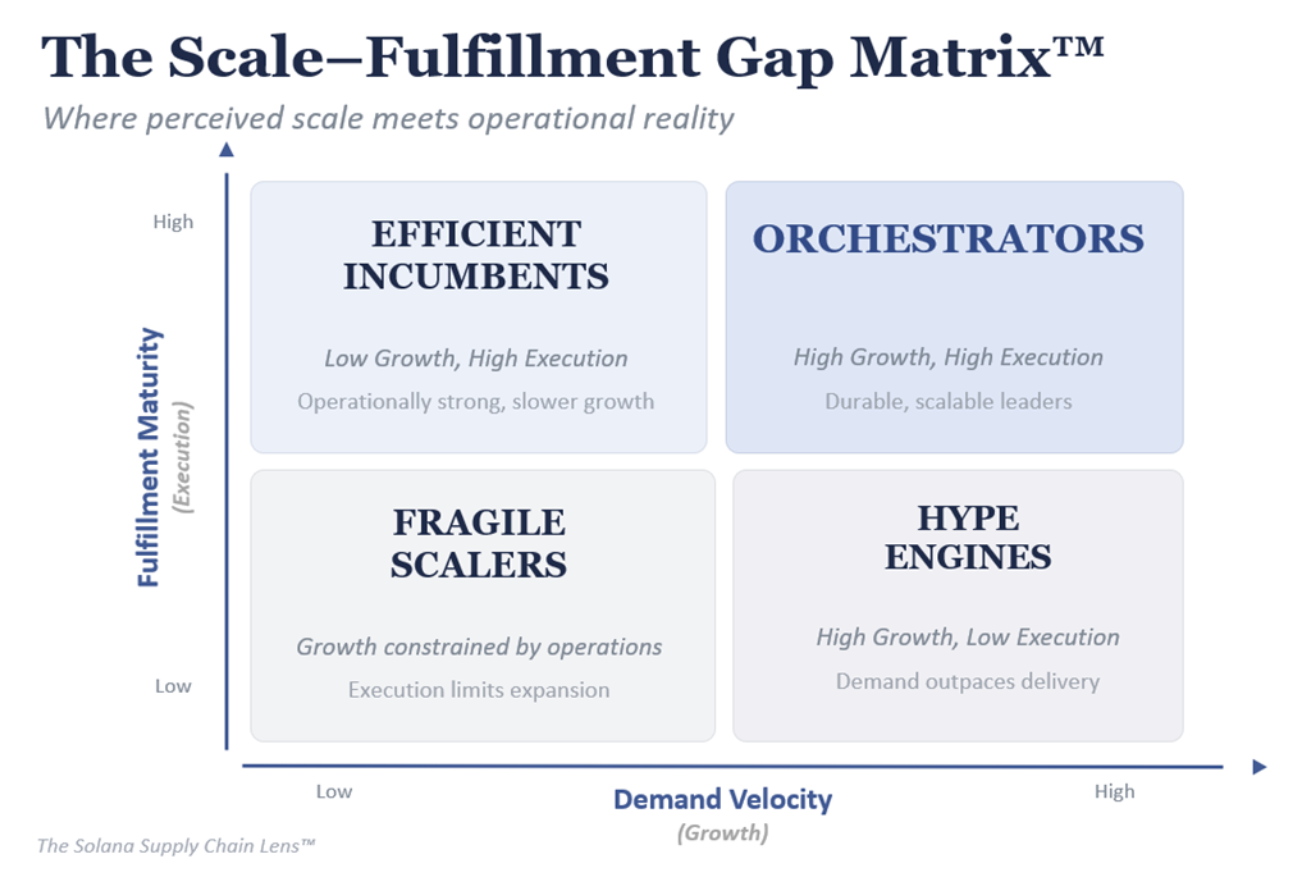
1. The Scale–Fulfillment Gap Matrix™
Scale no longer guarantees advantage.
It amplifies coordination risk.
As supply chains expand:
coordination complexity compounds
decision latency increases
execution quality degrades under volatility
Result: scale increasingly creates fragility—not strength.
This is a fundamental reversal.
Big is no longer better by default.
Adaptive is.
2. The Autonomous Orchestration Stack™
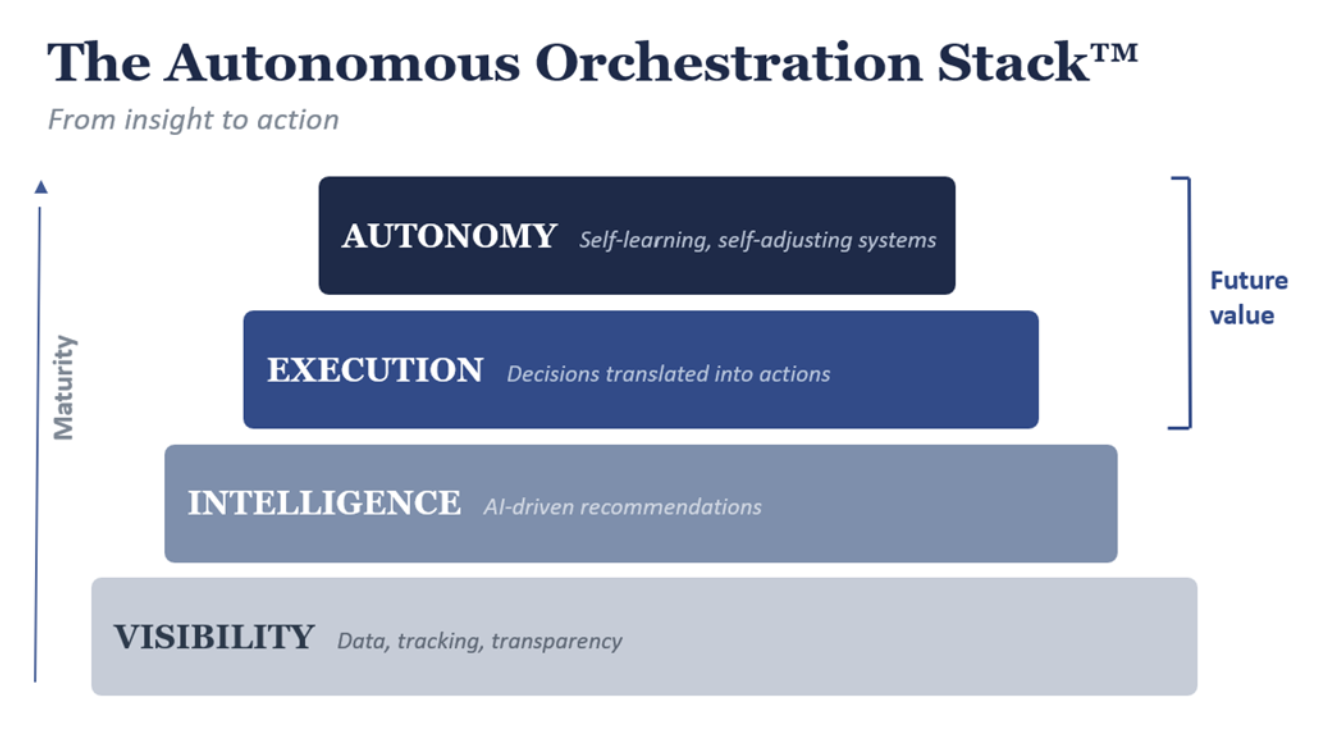
We are moving from software that shows decisions
to systems that make—and execute—them.
Legacy stack:
ERP / planning / visibility tools
human-in-the-loop execution
static optimization models
Emerging stack:
real-time signal ingestion
AI-driven decision engines
autonomous execution across networks
The shift is simple:
Value is no longer in seeing the system. It is in controlling it.
AI becomes economically relevant when it gains execution authority.
3. The Resilience Alpha Loop™
Resilience is no longer defensive.
It is a compounding advantage.
Resilience is not redundancy.
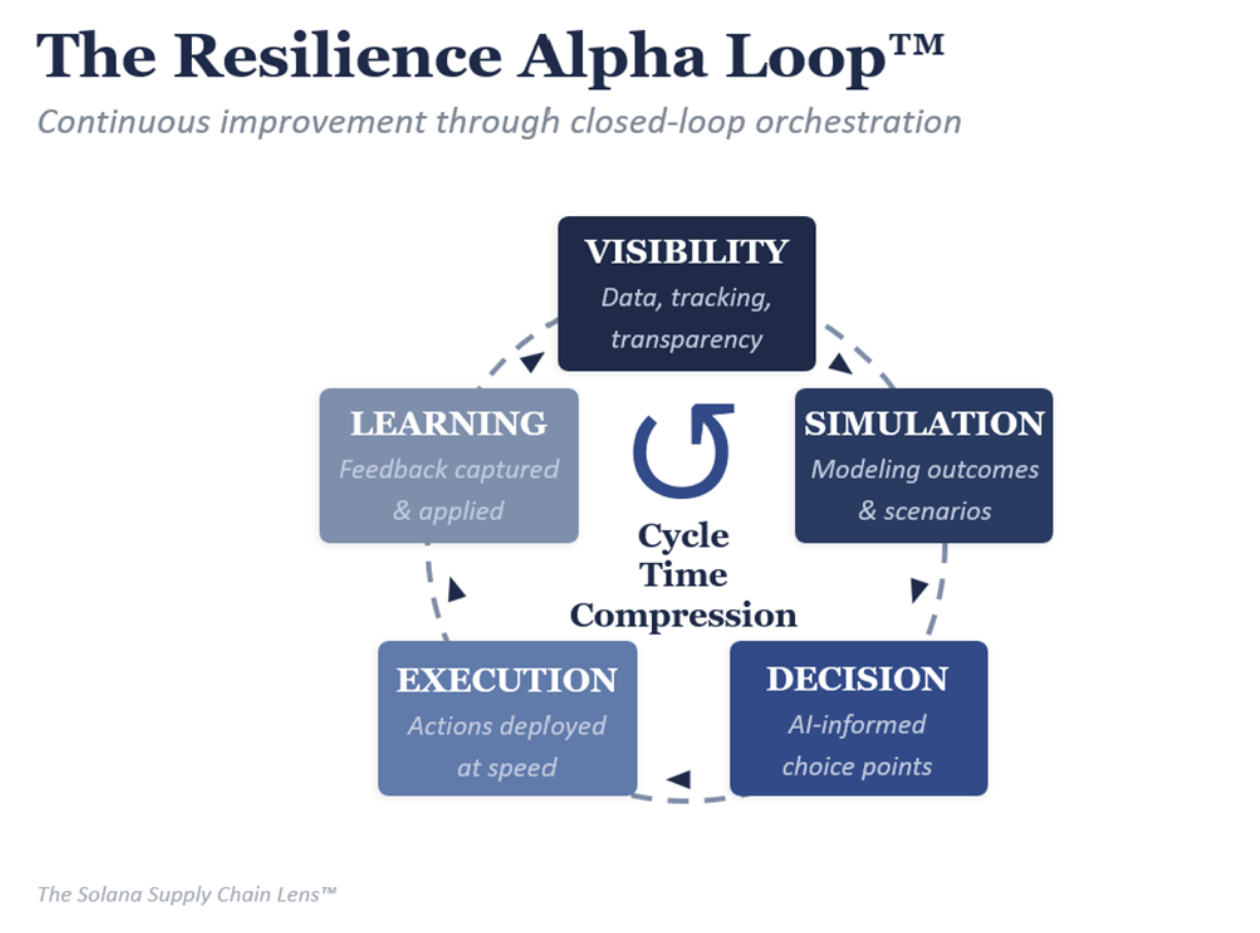
It is the speed of adaptation.
In adaptive systems:
disruption becomes input
response becomes learning
learning improves future performance
Over time:
systems that absorb shocks fall behind
systems that learn from shocks pull ahead
systems that outperform through shocks separate
Resilience is no longer risk management.
It is alpha generation.
When These Forces Converge
When you combine:
Scale–Fulfillment Gap™
Autonomous Orchestration Stack™
Resilience Alpha Loop™
Something more fundamental happens:
Supply chain stops being infrastructure.
It becomes the operating system of the physical economy.
These are no longer linear flows of goods.
They are becoming self-optimizing intelligence networks connecting AI systems to the real world.
This is not an incremental upgrade.
It is a structural redefinition of the layer beneath global commerce.
We are already seeing early signals of this in companies like Amazon and NVIDIA, where coordination and execution—not just product—have become core advantages.
The Investment Implication Most Are Missing
This is where capital is being reallocated—quietly, but structurally.
The emerging control points are:
Decision ownership
Systems that don’t just recommend decisions—but execute them
Adaptive physical networks
Infrastructure that reconfigures in real time
Learning loops
Systems that improve performance under volatility
Everything else trends toward commoditization.
The Repricing Already Underway
This is not incremental.
It is a category-level reallocation:
visibility tools → commoditizing
workflow automation → table stakes
static planning systems → breaking under real-time conditions
orchestration + execution layers → capturing premium multiples
The shift is clear:
From systems that observe supply chains
to systems that increasingly are the supply chain.
Why This Matters for Technology Investors
If you invest in:
AI infrastructure
enterprise software
logistics tech
automation platforms
marketplaces with physical execution
You are already exposed to this shift.
The only question is whether you are pricing it correctly.
The Solana Supply Chain Lens™
Through the Solana Supply Chain Lens™:
Scale is no longer linear—it is modular
Orchestration is no longer manual—it is autonomous
Resilience is no longer defensive—it is compounding
The core question for capital allocation is no longer:
How efficient is the supply chain?
It is:
Who controls the decision layer connecting AI systems to the physical economy?
Closing
This is not a supply chain story.
It is a reclassification of where value lives in technology.
The market has not fully priced this shift.
But it will.
This builds on a three-part series on how supply chain is becoming the defining layer of modern technology companies.
