

The Visionary Investor
Do you have a business in supply tech innovation? Are you trying to scale? You’re in the right place. Welcome to a wealth of articles written by Luis Solana, a seasoned pro in supply chain management and your trusted guide to transforming good ideas into great businesses.
Filter by Categories
Visibility | Global Trade | Resiliency | Productivity | Automation | Digitization | Orchestration | Agility | Investing | Strategy | All

The Polyfunctional Floor: Why Productivity's Next Multiplier Isn't Speed, It's Adaptability
I spent a good part of my operating career installing automation that did exactly one thing, extremely well, forever. A palletizer at a Henkel plant. A case packer at a Coty distribution center. Fixed-purpose, hard-tooled, and brilliant right up until the SKU mix changed, the demand pattern shifted, or the line needed to run a product it wasn't built for. Then it wasn't an asset. It was a constraint with a maintenance contract.
The Rulebook Being Rewritten: What the USMCA Review Actually Tests
On July 1, 2026, the United States, Mexico, and Canada opened the first mandatory joint review built into any U.S. free trade agreement — a formal reassessment of a pact that underwrites roughly $1.8 trillion in annual North American trade. That is not a procedural footnote. It is the treaty equivalent of an open architecture review, conducted in public, with the outcome genuinely undecided.

The Supply Chain Leader of 2030: Designing the Human-AI Operating Model for the Americas
In ten years, the best supply chain leaders will not be the ones who managed the most efficiently. They will be the ones who knew which decisions to give to the machine — and which ones to keep.
Green by Design, Not by Mandate: How ESG Is Rewiring North American Supply Chains
Carbon is already a tariff. US institutions are collecting it at the board level. The companies pretending it is not a cost structure are making a bet they have not yet acknowledged.
The Americas Trade Rewrite: Building a Supply Network That Outlives Any Tariff Regime
FDI in tariff-exposed, value-chain-intensive sectors fell 25% in 2025. That is not a footnote in a trade report. That is a quarter-trillion dollars redirected — away from supply networks that were optimized for a world that no longer exists.

3-Part Blog Series Summary- THE MISPRICED LAYER: Why Supply Chain Is Becoming the Control System of Modern Technology
Most investors are still misreading supply chain:
They think it’s an efficiency layer.
It’s becoming a control layer.
And control layers are where value concentrates.
If you are allocating capital into technology and not explicitly underwriting this shift, you are likely mispricing where value is moving next.
This is less about operations—and more about where control, and therefore value, is consolidating.
Blog 1/3 THE ILLUSION OF SCALABLE TECH: Why Supply Chain is the Real Constraint
Most technology investors are still pricing companies as if scale is frictionless. It isn’t.
Growth doesn’t fail because companies can’t sell. It fails because they can’t deliver—at scale, at cost, and on time.
That gap is widening, and it’s where value is quietly being destroyed.

ADVANTAGE - Decision Velocity Is the New Supply Chain Moat:
Slow decisions—not bad ones—are the biggest risk in 2026.
The advantage is no longer where you think it is
For decades, supply chain competitive advantage was built on three pillars:
Cost efficiency
Scale
Reliability
Over time, resilience was added to that list.
Today, all four are converging.
Technology has democratized access to data. Global networks have matured. Even resilience strategies—multi-sourcing, buffer inventory, redundancy—are becoming standard practice.
The result is a quiet but important shift:
The traditional sources of supply chain advantage are no longer differentiators.
So what is?
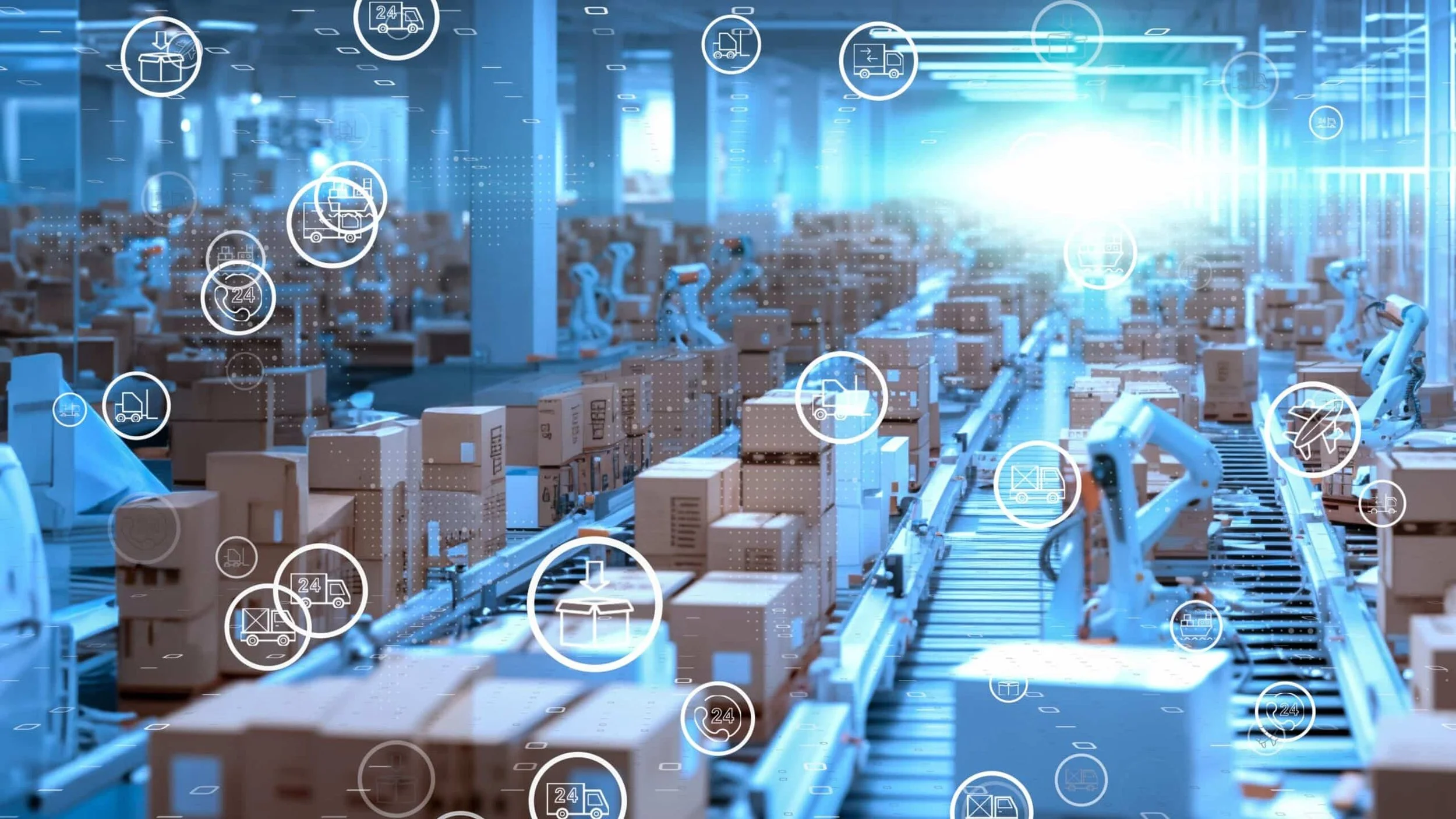
TRANSFORMATION - The Rise of Autonomous Supply Chain Decisions: From planning cycles to continuous, AI-driven orchestration.
The old model didn’t just break—it exposed its limits
In the first quarter of 2026, it became clear that supply chains have crossed a structural threshold.
Volatility is no longer episodic. Stability is no longer the baseline. And traditional supply chain operating models—built on planning cycles, functional silos, and human coordination—are increasingly outmatched by the environment they operate in.
But recognizing the problem is only the first step.
The more important question is: what replaces it?
Because if supply chains can no longer rely on periodic planning and reactive execution, then the entire model of how decisions are made must evolve.
And that evolution is already underway.

INFLECTION - Supply Chains Have Crossed a Point of No Return: The first 90 days of 2026 are forcing a new supply chain operating model
The beginning of 2026 didn’t disrupt supply chains — it exposed them
In the first quarter of 2026, global supply chains faced yet another wave of pressure.
Trade corridors remain fragile. Geopolitical tensions continue to reshape sourcing strategies. Demand signals are increasingly volatile, distorted by pricing pressure and shifting consumer behavior. Labor availability remains inconsistent across critical nodes.

Corporate Venture Capital: How to Keep Investments Innovative and Aligned
Last month, I covered the why behind corporations investing in supply chain startups. Now, let’s use my investment thesis as a framework for how to decide where to invest and with whom to partner.

Corporate Investment in Supply Chain Startups: Leveraging Innovation, Intelligence, and Strategic Advantage
For corporations with complex supply chains, the opportunity is clear: engage early, align strategically, and build a venture investment model that complements your business priorities.

From Operator to Investor: Meet Luis Solana
My supply chain operations experience gives me a unique background as General Partner, and the thorough understanding that comes with it. Supporting entrepreneurs and connecting with investors energizes me as we work together to bring innovation forward.